Your LEDs Aren’t Rubbish — Your Setup Might Be
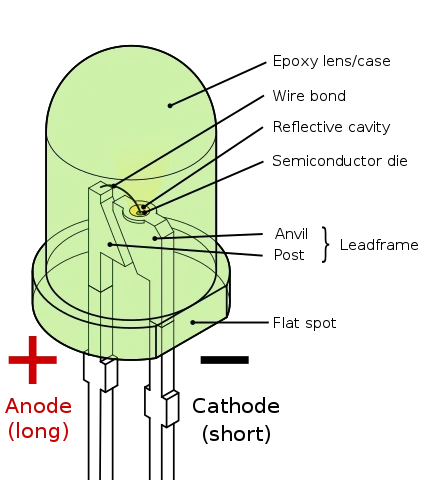
Photo: LED downlight flickering dimmer switch home lighting UK electrician, via electronicsreference.com
LED lighting has a brilliant sales pitch: use less power, last for years, never think about bulbs again. So when a new lamp starts humming like a fridge, strobes like a 1990s nightclub, or gives up after eighteen months, it’s tempting to conclude that LEDs are overpriced nonsense. In most homes, that’s not the lamp’s fault. It’s the setup around it.
There are four usual suspects: an incompatible dimmer, an old transformer that was never removed, a dimmer running below its minimum load, or a loose connection in the fitting. None of them are mysterious once you know what you’re looking at. Some you can diagnose safely from the floor. Others need the consumer unit switched off and a competent electrician involved.
First, separate the symptom from the cause
A buzzing LED is often a dimmer issue. A flickering LED can be a dimmer, a driver, or a loose lamp. An LED that dies early may be overheating in an enclosed fitting, or being fed by a transformer that belongs in the bin. And an LED that flickers only when the kettle goes on is telling you something about your wiring or supply, not about the lamp’s build quality.
Before you buy another pack of lamps, make a note of when the problem happens. Does it buzz all the time, or only when dimmed? Does it flicker at full brightness, or only at low levels? Does it happen on one circuit or several? Does it stop when you swap the lamp into a different fitting? That last test is free and tells you a lot.
Dimmer switches: the most common mismatch
Not every dimmer likes every LED. Older dimmers were designed for incandescent and halogen loads, which behave very differently from modern LED drivers. Put an LED on a dimmer that expects a chunky resistive load and you can get buzzing, flicker, a limited dimming range, or a lamp that never quite switches off.
The fix isn’t always a new dimmer. Sometimes it’s a different dimmer module, or a dimmer specifically rated for LED loads. But it has to match the lamps, the number of them, and the circuit. A dimmer rated for 400W of halogen may only handle a fraction of that in LED load, and the packaging doesn’t always make this obvious.
You can safely check the dimmer’s front plate and any label on the back — with the power off, please — and photograph the manufacturer and model number. Don’t start loosening terminals unless you’re competent to do so. A photo of the label is genuinely useful to an electrician.
Old transformers left in place
If your kitchen or bathroom had low-voltage halogen downlights, there may still be a transformer or driver hiding above each fitting. When someone swaps the halogen lamp for an LED and leaves the old transformer in place, the results can be poor: flicker, buzz, premature failure, or no light at all.
This is common in homes that have had a quick lighting upgrade. The LED lamp may be “compatible” in theory, but the old transformer is not. In many cases the smarter repair is to replace the transformer or driver with one matched to the LED, or to move to a mains-voltage fitting. That’s usually less disruptive than ripping out the whole ceiling circuit.
Minimum load and the dimmer’s comfort zone
Dimmers have a minimum load. If you replace six 50W halogens with six 5W LEDs, you’ve gone from 300W to 30W. Some dimmers won’t start reliably at that level, especially cheap ones or older models. You may find the lights flicker at the bottom of the dimming range, glow faintly when switched off, or refuse to come on until you nudge the dial.
The answer isn’t to add a random load resistor and hope for the best. It’s to check the dimmer’s minimum rating and whether it’s suitable for the LED load you now have. Sometimes a single replacement dimmer solves the whole problem. Sometimes the better answer is to split the lighting into groups so each dimmer has a sensible load.
Loose connections and ageing wiring
Flicker isn’t always a compatibility issue. A loose neutral or a poor connection in a fitting can cause intermittent flicker, buzzing or heat. That’s a safety issue, not a cosmetic one. If a lamp flickers when the fitting is tapped, if you can smell hot plastic, or if a fitting feels unusually warm, stop using it and get it checked.
Older wiring can also be a factor. If your lighting circuit is decades old, has been extended several times, or has junction boxes buried under loft insulation, an electrician may need to inspect more than the lamp. This is where an EICR or a targeted inspection earns its keep — not because LEDs are fragile, but because the circuit behind them may not be as healthy as you think.
What you can safely check yourself
Start with the simple stuff. Swap a suspect lamp into a fitting that works. Check the lamp base type and wattage against the fitting’s label. Photograph the dimmer model, the driver or transformer label, the lamp packaging, and the consumer unit’s RCD or RCBO labels. Note whether the problem affects one fitting, one room, or the whole lighting circuit.
Do not remove ceiling fittings, open consumer units, or poke around in terminals unless you’re qualified. LEDs run at lower power, but the mains supply behind them is still lethal. If you need to isolate the circuit, switch off at the consumer unit and prove it’s dead with a suitable tester — or leave it to someone who does that every day.
When replacing one part beats replacing everything
A disappointing LED installation often needs a modest fix: a compatible dimmer, a correctly matched driver, a replacement transformer, or a loose connection tightened. It rarely needs a full rewire just because the lamps buzz. The trick is to diagnose the cause before spending money on more lamps that will behave exactly the same way.
If you’re in any doubt, get an electrician to look at the controls and the fittings first. A quick assessment of the dimmer, driver and circuit is usually cheaper than a knee-jerk lighting replacement — and it’s a lot safer than guessing behind a ceiling rose. LEDs are not rubbish. They just don’t suffer old halogen-era setups gladly.