When the Air Fryer, Kettle and Hob All Want a Go: A Kitchen Circuit Reality Check
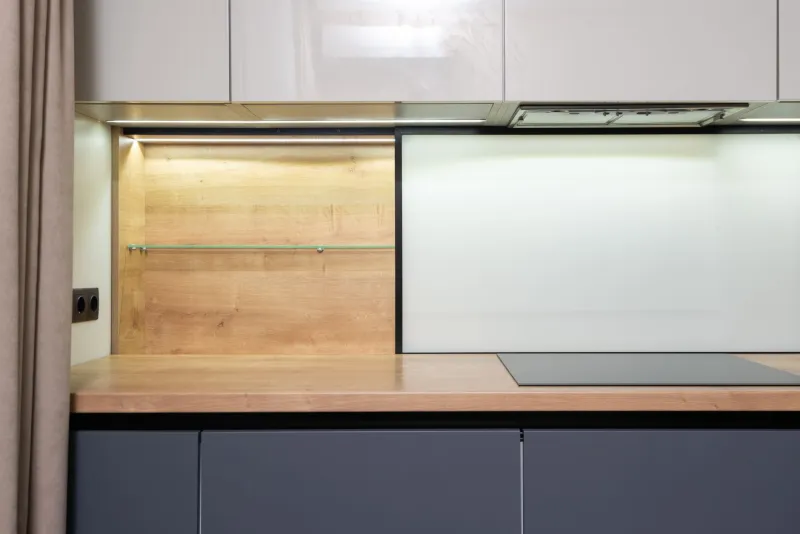
The kitchen has quietly become the most electrically demanding room in the house. It used to be a kettle, a toaster and maybe a microwave. Now it is an air fryer doing dinner, an induction hob boiling pasta, a bean-to-cup coffee machine warming up and an instant hot tap waiting to scald the washing-up water into existence. None of that is automatically a problem. But it does mean the humble 13-amp socket deserves a bit more thought than it usually gets.
The 13-amp socket is not a magic portal
A standard UK socket is rated at 13 amps, which is roughly 3kW at 230 volts. That is fine for a kettle on its own. The issue is what happens when several high-draw appliances are clustered on the same circuit, or worse, on the same double socket and a daisy chain of extension leads.
Most kitchen ring final circuits are designed around a 32-amp protective device, and many older kitchens still have a single ring covering the whole room. A radial circuit might be 20 amps or 16 amps. Those numbers are not huge when a single induction hob can pull 7kW at full tilt, even if it cycles on and off rather than running flat out. Add a tumble dryer, dishwasher or washing machine on the same circuit and the maths gets tight.
The point is not to panic about every small appliance. It is to notice when the kitchen has outgrown the wiring that was put in when the room had fewer toys.
What the gadgets actually draw
Here are rough figures, because rough figures are enough to spot a potential squeeze:
- Air fryer: often 1.4kW to 2.5kW, so roughly 6 to 11 amps.
- Kettle: usually 3kW, which is the full 13 amps.
- Induction hob: commonly 7.2kW connected load, though it rarely runs every zone at maximum for long.
- Coffee machine: around 1.5kW, more if it has a steam wand going.
- Instant boiling water tap: typically 3kW, and it reheats regularly.
- Microwave: around 1kW, sometimes more.
- Dishwasher or washing machine: around 2kW to 2.2kW during heating phases.
- Toaster: around 1kW to 1.5kW.
You can see the pattern. Two or three of those on the same circuit at the same time is normal life. All of them at once is a load test nobody asked for.
Warning signs worth taking seriously
Old wiring does not usually fail dramatically without some warning. Look for sockets or plug tops that feel hot to the touch, faceplates that have yellowed or browned, a faint burning smell, buzzing from a dimmer or socket, lights that flicker when the hob clicks on, or a breaker that trips when the air fryer and kettle are used together. A plug that is merely warm after a kettle boils is one thing. A plug that is hot, scorched or discoloured is a stop-and-check moment.
Also look at the extension leads. A coiled lead powering a 2kW heater or air fryer can get warm quickly. Multi-way adaptors stacked into one socket are not a distribution board. If the kitchen relies on them every day, the wiring is being asked to do a job it was not designed for.
When a dedicated circuit earns its keep
A dedicated circuit is the sensible fix when a high-load appliance has become a permanent fixture rather than an occasional guest. Instant hot taps, induction hobs, built-in coffee machines, large air fryers used daily and combi ovens are the usual candidates. Sometimes the answer is a new 16-amp or 20-amp radial for a specific appliance. Sometimes it is a kitchen sub-main or a consumer unit upgrade because the existing board has no spare ways and no RCD protection.
That is a job for a qualified electrician who can check the earthing, the protective device, the cable size and the route. Adding a socket is easy. Adding a socket that is safe for a 3kW continuous load on an old ring is a different conversation.
The pre-winter kitchen walk-round
Before the kitchen gets busier over winter 2026, do a quick audit:
- Map the sockets. Note which ones are on the same wall, the same ring and the same extension lead.
- Write down the wattage of the big appliances. The label or manual will tell you.
- Move high-draw appliances direct to wall sockets where possible. Keep extension leads for lamps and phone chargers, not heaters and air fryers.
- Stagger the big loads. Kettle first, then air fryer, then coffee machine. It sounds obvious because it is.
- Check the RCD test button on the consumer unit. If it does not trip, get it looked at.
- Look for heat damage at sockets and plug tops. If you find any, stop using that circuit until it has been checked.
- If you are a landlord, dig out the EICR and check the kitchen circuits are covered and in date.
The bottom line
A modern kitchen does not need to be rewired just because it has an air fryer. But it does need an honest look at where the load is going. If the same double socket is running the kettle, the coffee machine and a extension lead for the air fryer every morning, that is the moment to call in someone who can check the circuit properly. JEGS Electrical would rather have that conversation now than during Christmas dinner prep.