Electric Shower Tripping at Dawn? How to Tell a Nuisance Trip from a Real Fault
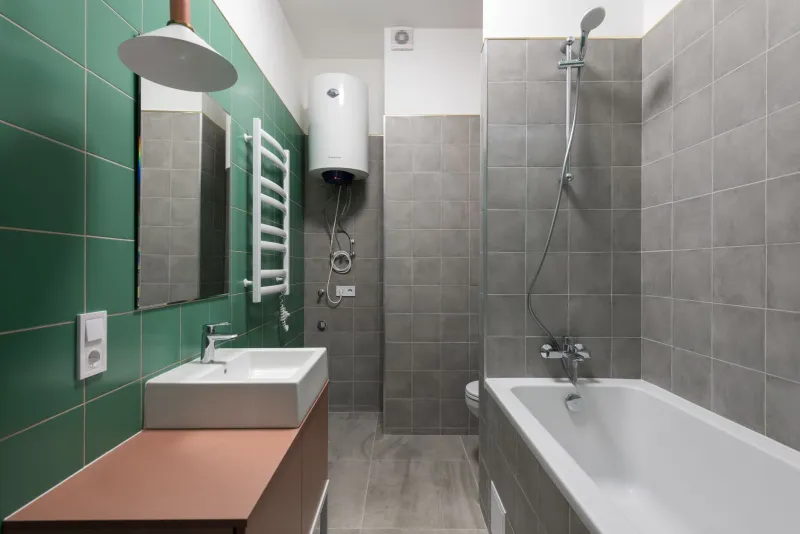
There are few household malfunctions more annoying than stepping into the shower at 6am, reaching for the pull cord, and watching the whole bathroom go dark. You reset the trip, the shower fires up, and two minutes later it cuts out again. By the third attempt you are standing on a damp bath mat wondering whether to laugh, swear, or ring someone.
Here is the important bit: resetting an electric shower circuit over and over is not fault-finding. It is guesswork with a wet hand. A shower is one of the highest-load circuits in a UK home, and it sits in one of the dampest rooms. If it keeps tripping, the circuit is telling you something. The trick is working out what.
First, identify what actually tripped
Before you blame the shower itself, look at the consumer unit. You need to know whether the device that moved is an RCD, an RCBO, or an MCB.
If a wider RCD has tripped, you may have lost power to several circuits, not just the shower. That points towards earth leakage, moisture, or a fault that is affecting more than one part of the installation. If only the shower MCB has tripped, that is more likely to be overload, a short circuit, or a failing component drawing too much current. An RCBO combines both jobs and gives you a clearer clue because it protects the shower circuit on its own.
The pull cord switch is an isolator, not a protective device. It is there so the shower can be switched off locally for maintenance. If pulling the cord does nothing, or the neon stays on when it should not, that is useful information, but it is not the same as an RCD or MCB trip.
Nuisance tripping versus a genuine fault
A nuisance trip is a trip that happens because the protection is doing its job a little too eagerly, or because small amounts of earth leakage are adding up. A genuine fault is a real defect: water in a connection, a failing heating element, a damaged cable, or a loose terminal.
The 6am pattern is a useful clue. If the shower trips on its first use of the day, then works later after a reset, moisture is a strong suspect. Steam and condensation can settle in the pull cord, the shower unit, or the connections over night. When the shower is first switched on, that moisture can create a brief leakage path to earth. Once the unit warms up and dries out, the trip may stop happening, which makes it look random when it is anything but.
If the shower trips after a few minutes of running, especially when the water is hot, the heating element is the more likely culprit. A failing element can lose insulation resistance as it heats up. The shower may still run, the water may still feel warm, and everything looks normal until the RCD decides it has seen enough.
Check the pull cord and the bathroom environment
You do not need to open the pull cord switch to gather evidence. Look for discolouration, scorch marks, a cord that feels slack or crunchy, cracking around the switch, or a faint buzzing when the shower is on. If the switch feels warm or smells at all fishy, stop using it and get an electrician in.
Bathrooms are hostile places for electrical accessories. Steam finds its way into places you would not expect. If the extractor fan has been playing up, or the bathroom window has been shut tight all winter, condensation has probably been building up. That does not automatically mean the pull cord is faulty, but it does explain why shower circuits can behave differently in November than they do in July.
Think about the heating element
Electric showers are simple beasts: cold water goes in, a heating element warms it, and the shower head does the rest. The element is usually the part that fails first. Scale builds up, the element runs hotter than it should, and the insulation inside it degrades. Eventually, current starts finding a path to earth, and the RCD trips.
A shower that trips after a few minutes, or one that has started feeling weaker or less consistent, is worth testing properly. An electrician will use an insulation resistance tester to check the element and the circuit. You cannot diagnose this by looking at it, and you should not try to bypass the protection to keep the shower running.
Is the circuit actually up to the job?
Electric showers have got more powerful. An 8.5kW unit draws roughly 37A at 230V, a 9.5kW unit around 41A, and a 10.5kW unit close to 46A. Those are not small numbers. The circuit needs the right cable size, the right protective device, and the right installation method.
If someone has swapped an old 7.5kW shower for a bigger unit without checking the cable and breaker, the MCB may trip after a few minutes of use. That is not a nuisance trip. That is the circuit saying it cannot carry the load. If the MCB is tripping rather than the RCD, and it happens once the shower has been running for a while, overload or cable sizing deserves a serious look.
The shared RCD problem
Sometimes the shower is not the guilty party at all. If the shower shares an RCD with other circuits, the trip at 6am could be the result of several small leakage paths adding up. A boiler, an immersion heater, an outside light, or a fridge defrosting overnight can all contribute. The shower is simply the appliance that pushes the total over the edge.
That is why a proper fault-finding visit involves testing, not just looking at the shower. An electrician will check the RCD, test the circuit, inspect the terminations, and assess the cable. Sometimes the fix is a new element. Sometimes it is a loose connection. Sometimes it is a consumer unit upgrade or a circuit alteration. You cannot tell from the outside.
What you can safely do before you call
You can note what tripped, when it tripped, and what else lost power. You can check whether the shower trips immediately, after two minutes, or after ten. You can look for obvious signs of water, heat, or damage at the pull cord. You can stop using the shower if it keeps happening.
What you should not do is keep resetting the device and hoping for a different result. You should not open the shower unit, tape over a switch, or replace the pull cord with whatever was left over from a DIY job. Electric showers are not the place for experimentation.
When to stop resetting and call an electrician
Stop and call a qualified electrician if the shower trips more than once, if the RCD will not reset at all, if there is any burning smell, buzzing, scorch mark, or visible water near the electrics, or if you have to reset the circuit every morning to get a shower. If you rent, report it to your landlord. Shower circuits are their responsibility, and this is exactly the sort of fault that should be documented.
A 6am trip is not just inconvenient. It is a sign that something in a wet, high-current circuit is not happy. Get it tested properly, and you can go back to blaming the boiler for your morning problems instead.